

Search
Popular content
Site Feeds
- All content:

- Blog posts:
You are here
Produsage and Politics: Another Article in German
Hot on the heels of the new book chapter that I mentioned in my previous post comes another chapter (though technically this one was indeed published in 2009, while the previous one has been pre-dated to 2010 - such are the mysteries of academic publishing). And this chapter is another one of my German-language articles, too, this time on produsage (or Produtzung) and its implications for politics and political organisations - which may also make it a useful companion piece to my recent interview for Polar Magazin.
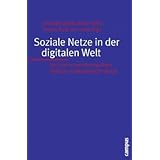 The book, Soziale Netze in der digitalen Welt, edited by Christoph Bieber, Martin Eifert, Thomas Groß, and Jörn Lamla, follows on from a conference in Gießen at which I presented in 2008, but my contribution, "Produtzung: Von medialer zu politischer Partizipation", takes a considerably longer view of potential developments in political participation than the more strongly citizen journalism-focussed paper at the conference itself; it explores similar ideas to my 2008 journal article for Information Polity, in fact.
While the book covers considerably more ground than 'only' politics, as its title - social networks in the digital world - implies, I think it's the four chapters on social media and politics which will attract particular interest in Germany: after all, the country is experiencing a time of considerable political upheaval, with a new centre-right coalition government, a newly fractured left whose current state recalls the dark days of the bitter SPD/USPD split in the early Weimar Republic, and the emergence of new single-issue groups such as the German Pirate Party. Social media will have a key role to play in attracting new members to these parties (or enticing old ones back to active membership) and in promoting their various causes.
- Snurb's blog
- Log in to post comments
- 12519 reads
 Printer-friendly version
The Book

Blogs, Wikipedia, Second Life, and Beyond: From Production to Produsage is now available from Amazon and other retailers. More information...
